

01
Manufacturing
Quotes that take four days, schedules rebuilt by hand every morning, and tribal knowledge walking out at retirement.
Quote turnaround from 4 days to 3 hours at a 340-person fabricator
Most mid-sized companies don't have an AI problem. They have a margin problem they can't see. We spend two weeks inside your operation, put a number on every leak, and build agents only where that number justifies it.
Fixed fee. Two weeks. You keep the findings whether or not you hire us.
The AI Diagnostic
Every company we walk into believes it knows where its margin goes. Almost none of them are right. The leak is rarely a line on the P&L — it sits in the gap between systems, in work that gets done twice, in decisions that wait three days for someone to be back at their desk.
We instrument that gap. Two weeks of interviews, system pulls and shadowing, turned into a ledger: every recurring loss, what it costs you a year, and what share of it software can actually recover. Then a build plan, ranked by payback period.
A representative leak ledger
Composite figures from a 340-person manufacturer, annualised. Your ledger will look different — that is the point of measuring rather than guessing.
Total identified leak
$2,410,000
Recoverable in year one
$1,180,000
01
Inbound requests wait an average of 31 hours for a first human response. Roughly one in five is gone before anyone replies.
Annual cost
$720,000
$460,000 recoverable
02
The same order data is typed into the ERP, the scheduling sheet and the customer portal by three different people.
Annual cost
$540,000
$380,000 recoverable
03
Anything that deviates from the standard path lands in a supervisor's inbox and stalls until they triage it by hand.
Annual cost
$480,000
$210,000 recoverable
04
Staff spend a measurable share of every week chasing paperwork that a system already knows is missing.
Annual cost
$395,000
$95,000 recoverable
05
Pricing logic, tolerances and customer history live with long-tenured staff. Every absence is a slowdown; every retirement is a loss.
Annual cost
$275,000
$35,000 recoverable
Nothing on that list is a technology failure. Every one of them is a place where the work outgrew the system that was supposed to carry it.
See the full one-pager01
Days 1–4
We shadow the people doing the job — dispatch, claims, scheduling, service — and log every interruption, hand-off and workaround as it happens. No workshops, no questionnaires.
You getAn annotated map of how work really moves through your company
02
Days 5–8
We take read-only extracts from your ERP, CRM, ticketing and inbox systems and measure the things nobody reports on: cycle times, touch counts, rework rates, response latency.
You getThe leak ledger — every recurring loss with a dollar figure attached
03
Days 9–11
We build throwaway prototypes against your real data. A leak only stays on the recoverable list if a working prototype clears your accuracy bar on your own records.
You getEvidence, not estimates — prototypes you can watch run
04
Days 12–14
You get a ranked build plan with payback periods, a fixed price for each build, and an honest list of the leaks we would not touch. Sometimes the right answer is a process change and no software at all.
You getA one-page decision document and a costed roadmap
Industries
We work where the operation is physical, the margins are real and the software was bought a decade ago. The failure modes rhyme across all five — which is why the diagnostic finds them fast.
01
Quotes that take four days, schedules rebuilt by hand every morning, and tribal knowledge walking out at retirement.
Quote turnaround from 4 days to 3 hours at a 340-person fabricator

02
First-notice-of-loss triaged by hand, submissions re-keyed from PDFs, and claims that sit in a queue because nobody has read them yet.
71% of low-complexity claims triaged without a human touch

03
Check calls, appointment scheduling and carrier chasing consuming the working day of people you hired to solve exceptions.
Dispatch capacity up 2.4× with no additional headcount
04
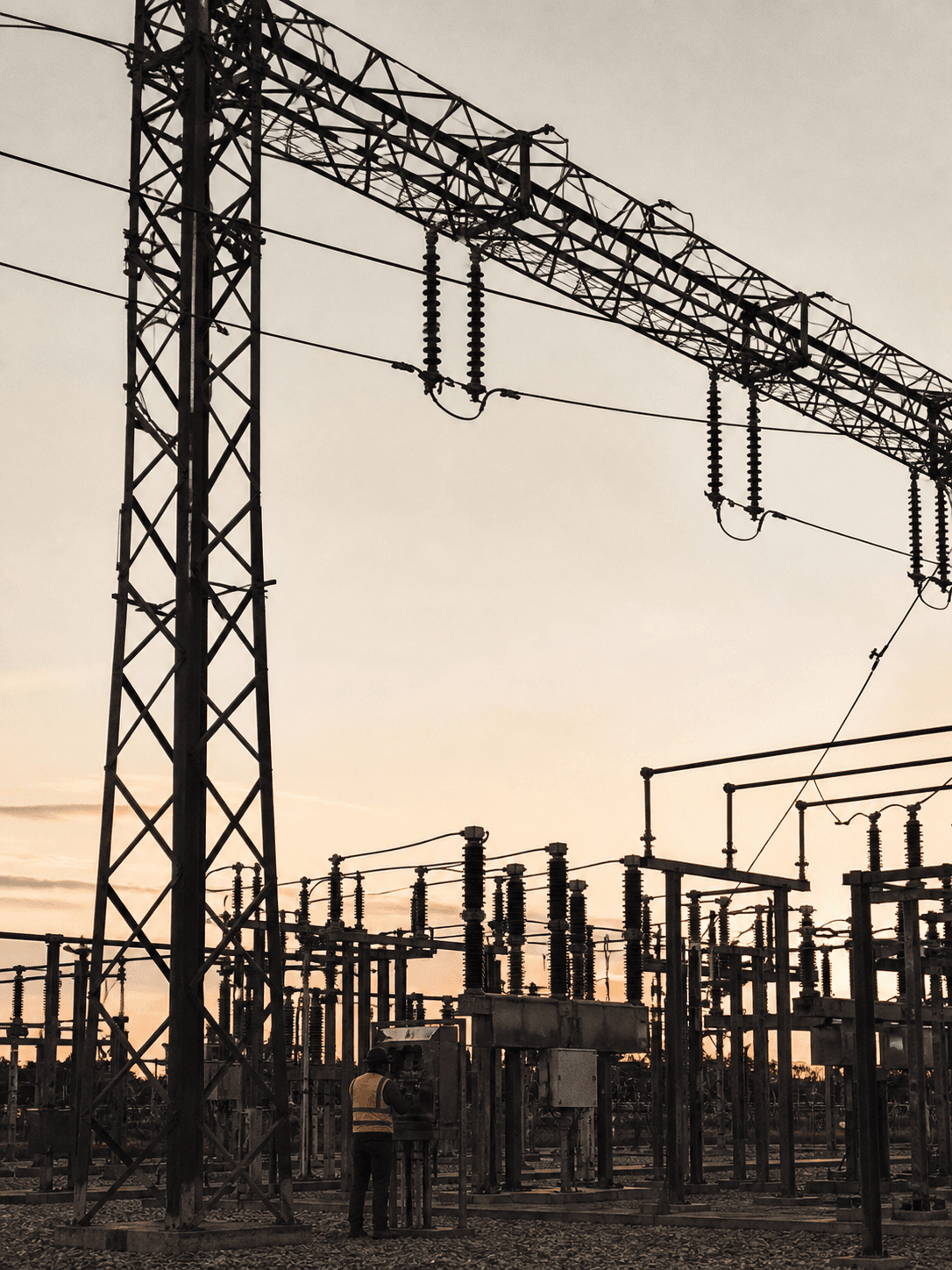
Outage calls, meter disputes and connection requests handled by a queue that collapses the moment weather turns.
Storm-day call abandonment cut from 34% to 6%

05
RFIs, submittals and variation orders moving at the speed of whoever last checked their email on site.
RFI response time down from 9 days to under 48 hours
How we work
Scale
No transformation office, no eighteen-month programme, no six-figure discovery phase. You have one IT lead and a business to run — we work to that reality.
Evidence
Every build we propose carries a payback period calculated from your own numbers. If it does not clear twelve months, we tell you not to do it.
Ownership
The agents run in your cloud on your data. You get the source, the evaluation suites and the runbooks. No seat licences, no lock-in, no hostage situation.
01
The diagnostic ranks by dollars recovered, not by what is technically interesting. The first agent we build is usually the least glamorous one.
02
First agent live in nine weeks, handling real volume with a human review path. A pilot that never leaves the sandbox has recovered nothing.
03
Every agent ships with an evaluation suite that runs against live traffic. When accuracy drifts, you find out from a dashboard, not from a customer.
04
Your team is in the repository from week one. Our engagement ends when your people can extend the system without calling us.
Results
Figures from engagements at companies between 60 and 2,000 people, measured against a pre-deployment baseline we established during the diagnostic.

A fixed fee agreed before we start, scaled to your headcount. It is the only thing you are committed to — there is no obligation to proceed to a build, and the findings are yours either way.
No. Below about 50 people the leak is usually small enough that a process change beats software, and we will say so. Between 50 and 2,000 is where this work pays for itself fastest.
Read-only extracts from the systems that matter — typically ERP, CRM, ticketing and a shared inbox — plus time with the people doing the work. We sign your NDA and work inside your data-processing terms.
It happens, and we say so in writing. You still leave with a costed map of where your margin goes, which is worth having regardless of who fixes it.
The diagnostic is fixed-fee and self-contained. At the end you have a number, a ranked plan, and no obligation to spend another dollar with us.